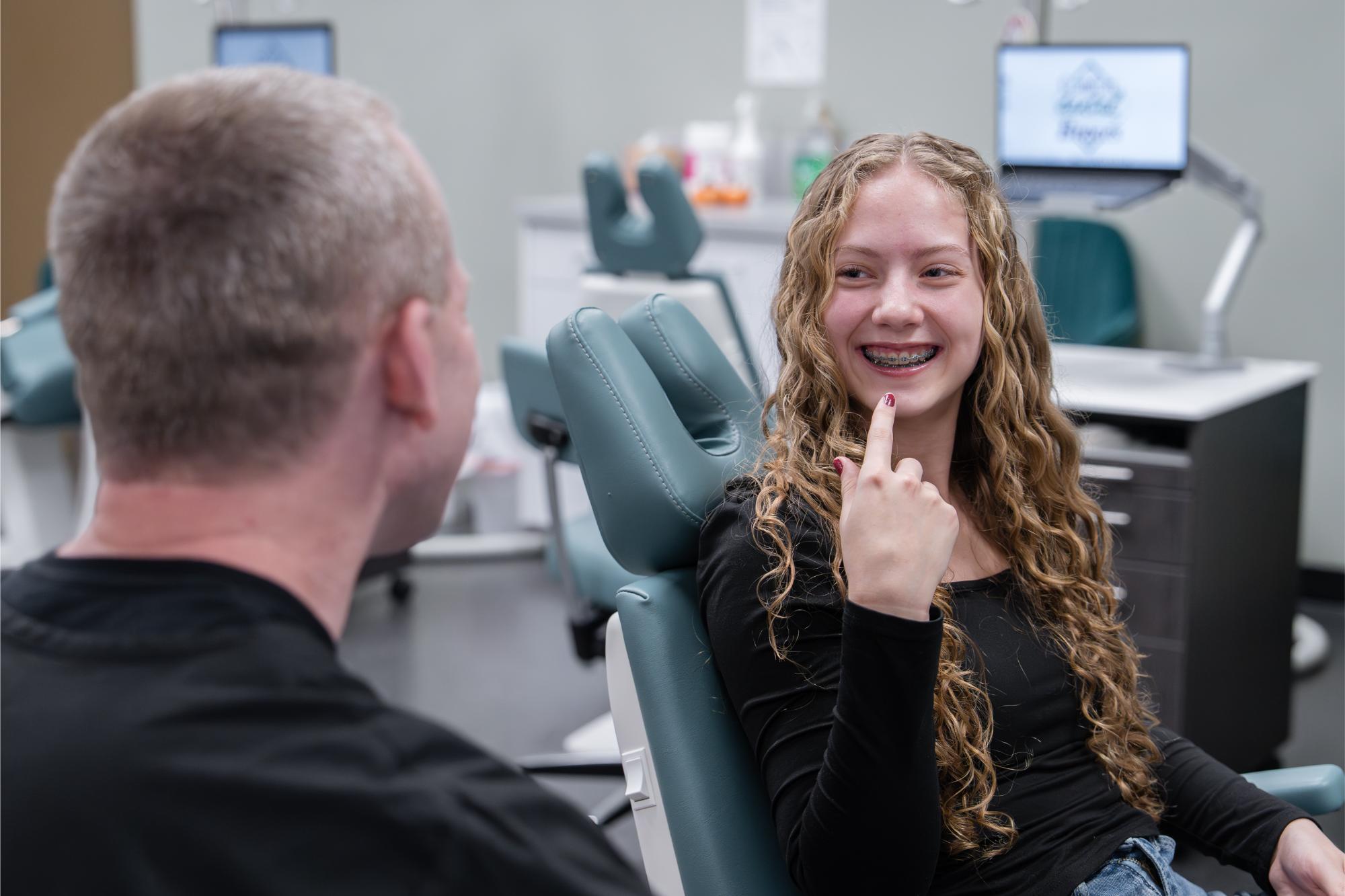
Wondering if it’s time for braces? A few everyday clues can tell you a lot. From crowded teeth to a jaw that clicks when you yawn, certain signs point toward a visit worth making. At Comfort Dental Braces, Dr. Steve Clawson evaluates each of these signs to help you decide if treatment is right for you or your child.
What Does It Mean to Need Braces?
Needing braces means your teeth, bite, or jaw would benefit from being guided into a healthier position. Braces do more than straighten smiles. They correct how your upper and lower teeth fit together, reduce uneven wear, and make daily brushing easier.
A quick glance in the mirror won’t tell you the full story. Some alignment issues sit below the surface, affecting how you chew, speak, and even sleep. That’s why an in-person evaluation matters, and it’s a big part of the smile journey we share with every patient.
Both kids and adults can be great candidates. According to the American Association of Orthodontists, a first orthodontic checkup is recommended by age 7, but it’s never too late for adults to start. Dr. Steve Clawson, a Board-Certified Orthodontist, sees patients of all ages, and our team welcomes families from Lakewood, WA and the surrounding area.
The 7 Signs It’s Time to See an Orthodontist
Not sure if what you’re noticing is normal? Here are seven common signs that a free consult with an orthodontist is a smart next step.
Do Your Teeth Feel Crowded or Overlapping?
If your teeth feel packed together, twist over one another, or make flossing feel like a puzzle, crowding is likely the cause. Crowded teeth are harder to clean and often lead to plaque buildup along the gumline. Left alone, tight spacing can also make certain teeth wear unevenly against each other over the years.
Is Your Jaw Sore, Stiff, or Clicking?
Do you wake up with a sore jaw? Hear a click when you open wide? These can be signs of a bite issue or TMJ strain. Dr. Clawson can look at how your jaw joints and teeth work together and explain what he sees in plain language, so you understand what’s happening.
Does Chewing or Biting Feel Awkward?
Chewing shouldn’t feel like work. If food gets stuck in the same areas, or one side of your mouth does most of the chewing, your bite may be uneven. Over time, this can wear down enamel and put extra stress on certain teeth, which is exactly the kind of thing an early visit can catch.
Do You or Your Child Breathe Through the Mouth?
Habitual mouth breathing, especially in kids, can point to a narrow upper jaw or airway concerns. An early evaluation gives Dr. Steve a chance to guide jaw growth while it’s still happening, which often leads to easier care later on.
Are There Noticeable Gaps or Protruding Teeth?
Gaps between teeth, front teeth that stick out, or a top jaw that sits too far forward or back are all reasons to schedule a visit. These issues rarely fix themselves, and they can affect speech and confidence at any age.
Has Your Alignment Shifted Over Time?
Adult teeth can move, even after previous orthodontic treatment. If your smile looks different than it did a few years ago, or your retainer no longer fits, it’s worth a check-in with Dr. Clawson before small shifts become bigger ones.
Is It Hard to Keep Your Teeth Clean?
When teeth are hard to reach with a brush or floss, cavities and gum irritation tend to follow. If your dentist keeps flagging the same areas visit after visit, alignment may be the underlying cause, and straightening things out can make cleaning far simpler.
Benefits of Seeing an Orthodontist Early
Catching alignment issues early pays off in more ways than one. Here’s what an early visit with Dr. Steve can do for your smile journey.
How Does Early Treatment Protect Your Smile?
Guiding growth now can head off more involved treatment down the road. Straight teeth are also simpler to clean, which supports healthier gums. A balanced bite reduces uneven wear and eases TMJ strain, protecting both your teeth and jaw joints for the long haul.
What Else Can an Early Visit Do for You?
An early visit often boosts confidence, since a smile you’re proud of changes how you show up in photos, at work, and everywhere in between. It may also shorten total treatment time, because early evaluation lets Dr. Clawson plan the right moment to start. For kids, Phase 1 treatment can lay a strong foundation while baby and permanent teeth are still mixed. For adults, an early visit means catching shifts before they grow.
Treatment Options: Comparing Your Choices
There’s no single answer that fits everyone. Dr. Clawson will walk you through all your treatment options during your free consultation. Here’s a quick look at how the main treatments compare.
| Option | Best For | Look | Removable |
|---|---|---|---|
| Clear aligners | Mild to moderate cases, adults and teens who want a subtle option | Nearly invisible trays | Yes |
| Metal braces | Complex corrections, all ages | Small metal brackets and wires, colorful braces optional | No |
| Clear braces | Adults and teens wanting a subtler fixed option | Tooth-colored brackets | No |
Clear aligners offer a subtle path to straight smiles and let you eat what you love. Metal braces are reliable and effective, always on track for more complex cases. Clear braces are a subtle spin on a classic, blending in with your natural tooth color.
The right choice depends on the severity of your case, your daily routine, and your goals. Dr. Steve will help you weigh the options during your visit and answer every question along the way.
How Does the Orthodontic Process Work?
Getting a healthier smile follows clear steps. Here’s what to expect at Comfort Dental Braces from start to finish.
- Start with a free consultation. Meet Dr. Steve, share your concerns, and get honest answers. Prefer to start from home? We also offer a virtual consult option for patients near Federal Way, WA and beyond.
- Digital scans map your teeth. No trays, no goop. Our digital scanners create a 3D model of your smile in minutes.
- Receive your personalized treatment plan. Dr. Clawson designs a plan based on your bite, your goals, and your lifestyle.
- Attend regular adjustment visits. These short check-ins keep your teeth moving in the right direction, usually every 4-8 weeks.
- Wear a retainer to hold your results. Retainers protect the work you’ve put in and keep your smile in place for years to come.
Every step is designed around you. You come first from your first call to your final visit.
What Affects the Cost of Braces?
The cost of orthodontic treatment depends on the type of braces you choose, how complex your case is, how long treatment lasts, your age and goals, and your insurance coverage. No two plans look exactly alike, so a free consult gives you the clearest picture. Here’s what shapes your final estimate:
- Type of treatment. Metal braces, clear braces, and clear aligners each have different price points.
- Complexity and length of treatment. A mild case may wrap up faster than a case involving bite correction or jaw growth.
- Age and treatment goals. Phase 1 care for kids looks different from full treatment for teens or adults.
- Insurance coverage. We accept PPO plans and help you understand your benefits.
- Flexible options. Interest-free payment plans make it easier to fit treatment into your budget.
The most accurate way to know your cost is with a free consult. You’ll leave with clear numbers and no surprises.
Are You a Candidate for Braces?
Most people with alignment or bite concerns are candidates for treatment. That includes kids in Phase 1 care, teens ready for a confident smile before graduation, and adults who never got the chance the first time around. Patients across Lakewood, WA visit us with all kinds of goals, and we tailor care to each one.
A few things help set you up for success:
- Healthy teeth and gums going into treatment
- A willingness to follow your care plan (wearing aligners, keeping visits, caring for braces)
- Realistic goals and open communication with Dr. Clawson
Dr. Steve confirms suitability during your first visit. If treatment isn’t the right fit today, he’ll tell you honestly and let you know when to check back in. That kind of straightforward guidance is what patient-centered care looks like at every stage.
Frequently Asked Questions
At What Age Should Braces Start?
The American Association of Orthodontists recommends a first orthodontic checkup by age 7. That doesn’t mean braces begin then, but it lets Dr. Clawson spot growth patterns early. Adults can start treatment at any age, since healthy teeth can be moved throughout life.
How Long Do Braces Usually Take?
Most treatments last somewhere between 12 and 24 months, though the exact timeline depends on your case. Mild alignment concerns may wrap up faster, while bite corrections or jaw growth take longer. Dr. Steve will give you a realistic estimate during your free consult.
Are Braces or Clear Aligners Better?
Neither option is better for everyone. Clear aligners suit mild to moderate cases and offer a subtle path to straight smiles, while metal and clear braces handle more complex corrections. Your bite, your routine, and your goals all help decide which fits best.
Does Getting Braces Hurt?
Most patients feel mild pressure or soreness for a few days after a visit, which usually eases quickly. This is a normal sign your teeth are shifting into place. Over-the-counter relief and softer foods help during those first days, and our team is always here to guide you.
Ready, set, smile! Whether you’re a new patient or wrapping up years of care, you’ll always be greeted with a smile and treated like family here.