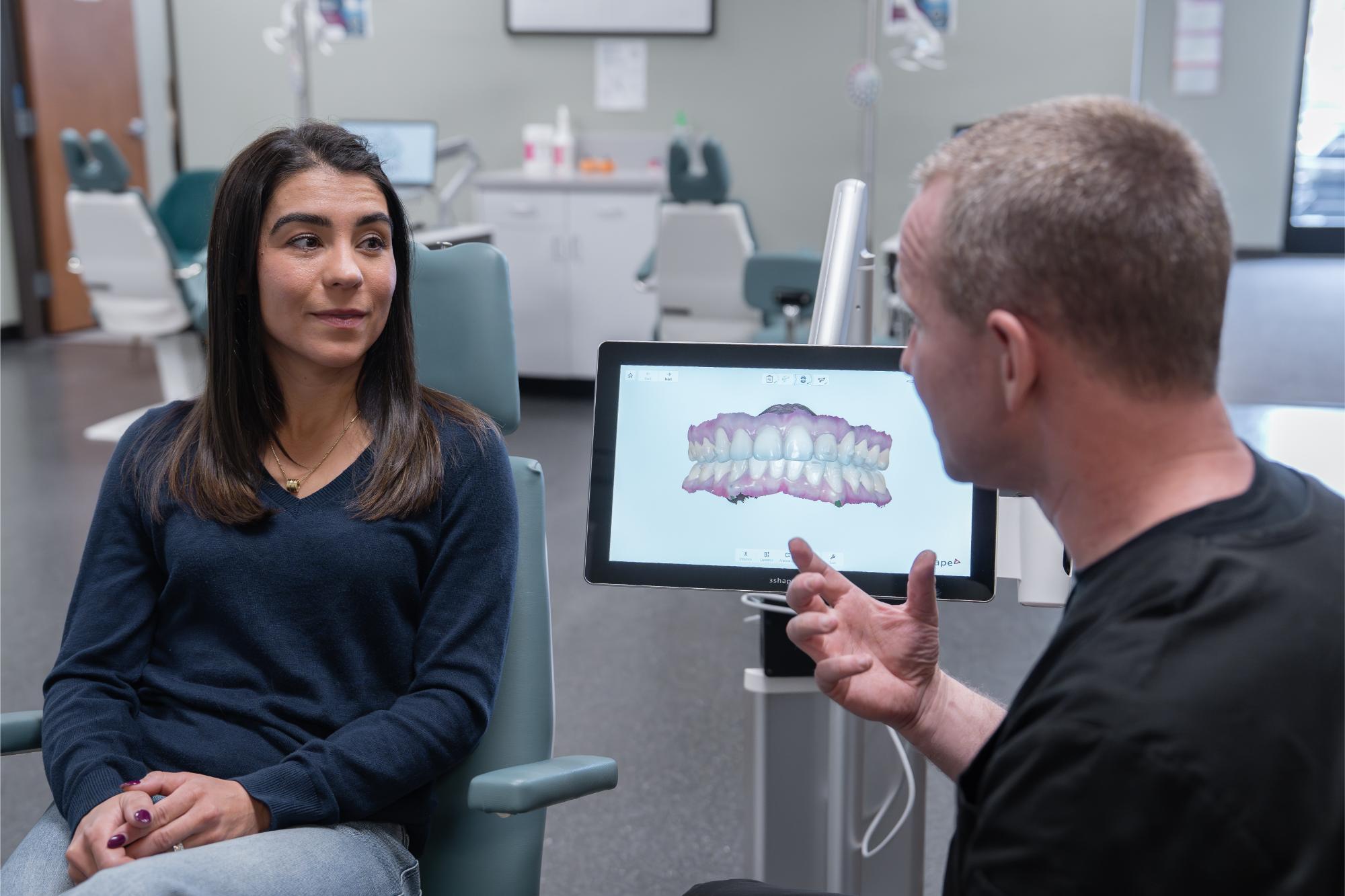
No, it’s not too late. Adults of virtually any age can get braces, as long as your gums and supporting bone are healthy. Adult patients make up a real and growing share of orthodontic care today. Age isn’t the deciding factor. Your oral health is.
This guide walks you through everything you need to know: your options, what to expect, timelines, and how to know if adult braces are right for you.
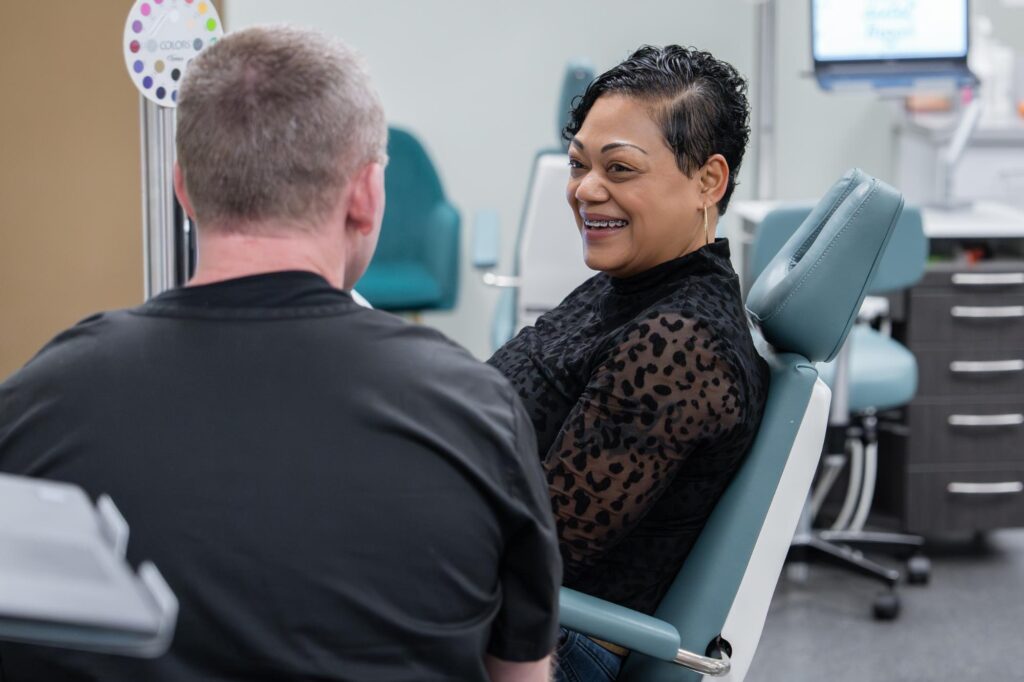
Why More Adults Than Ever Are Getting Braces
Adult orthodontics has grown steadily, and it’s not hard to see why. Treatment looks and feels different than it did a generation ago, and more adults are choosing to invest in their smiles.
Here’s what’s driving the shift:
- Discreet options. Clear aligners and clear braces make treatment nearly invisible.
- Financial readiness. Many adults are now in a position to pursue the treatment they missed out on as kids or teens.
- Relapse from earlier treatment. If you wore braces years ago but stopped wearing your retainer, your teeth may have shifted back.
- Oral health awareness. Straighter teeth are easier to clean, which lowers your risk of gum disease and decay.
- Video calls and selfies. Remote work and social media have made a lot of people more aware of their smiles than ever before.
Whatever the reason, you’re in good company. Adult treatment is one of the fastest-growing areas in orthodontics.
How Adult Orthodontic Treatment Differs From Kids and Teens
Adult teeth move the same way kids’ teeth do, but there are a few important differences worth knowing before you start.
Your bones are fully developed. Kids and teens have growing jawbones, which can make certain corrections easier. As an adult, your teeth still move, but through mature bone. Treatment sometimes takes a bit longer as a result.
Existing dental work needs to be considered. Crowns, bridges, implants, veneers, and fillings all play a role in how your treatment is planned. Implants, for example, don’t move like natural teeth, so Dr. Steve Clawson designs your personalized treatment plan around them.
Gum and bone health come first. Before starting treatment, we evaluate your periodontal health. Healthy gums and adequate bone support are essential for moving teeth safely.
Coordinated care is common. As a board-certified orthodontist, Dr. Clawson often works alongside your general dentist or periodontist to make sure every part of your oral health is on the same page. This team approach is one of the reasons adult treatment goes smoothly.
Types of Braces and Aligners for Adults
You’ve got more options than ever. At Comfort Dental Braces, we offer several treatment types so you can choose what fits your lifestyle and goals.
Metal Braces
Time-tested and highly effective. Modern metal braces are smaller and more comfortable than the ones you may remember. They’re a strong choice for complex cases.
Clear Braces
Tooth-colored brackets that blend in with your natural smile. They work like metal braces but are far less noticeable, making them popular with professionals.
Clear Aligners
Removable, nearly invisible trays that gradually shift your teeth. You take them out to eat and brush, which makes them a lifestyle-friendly option for many adults.
| Option | Visibility | Best For | Removable |
|---|---|---|---|
| Metal Braces | Most visible | Complex bites, efficient movement | No |
| Clear Braces | Low visibility | Adults wanting a tooth-colored look | No |
| Clear Aligners | Nearly invisible | Mild to moderate cases, busy lifestyles | Yes |
Your best option depends on your bite, your goals, and how much your lifestyle influences your day-to-day preferences. A free consult is the fastest way to figure out which one fits you.
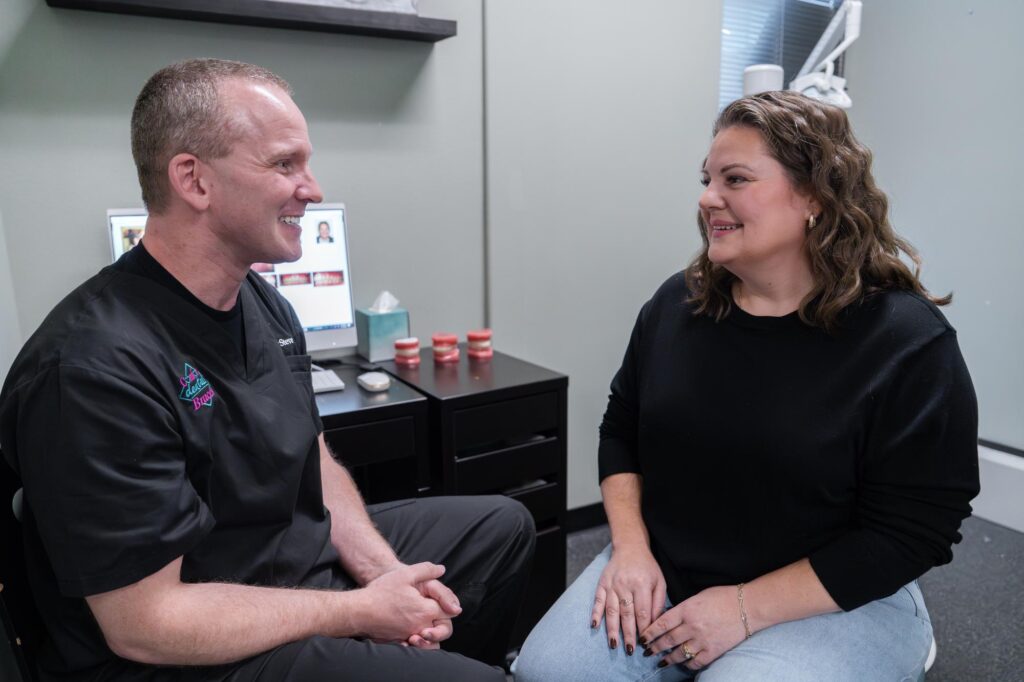
Benefits of Getting Braces as an Adult
Straightening your teeth as an adult pays off in ways that go beyond appearance. Here’s what you can expect:
- Easier cleaning. Straight teeth are simpler to brush and floss, which lowers your risk of cavities and gum disease.
- Better bite function. A properly aligned bite reduces stress on your jaw, which can ease TMJ symptoms and headaches.
- Less enamel wear. Misaligned teeth grind unevenly. Correcting the bite protects your enamel for the long haul.
- Confidence boost. Many adults report feeling more comfortable smiling in photos, meetings, and social settings.
- Protection for existing dental work. A balanced bite helps your crowns, veneers, and fillings last longer.
These benefits stick with you for decades. Investing in your smile now pays dividends for the rest of your life.
What Disqualifies You From Getting Braces?
Very few things permanently disqualify an adult from getting braces. Most obstacles can be treated first, then treatment moves forward. The most common issues we address before starting orthodontics include active gum disease, significant bone loss, untreated cavities, and certain medical conditions.
Here’s what we look for at your evaluation:
- Active periodontal disease. Gum disease must be under control before we move teeth.
- Significant bone loss. If the bone supporting your teeth is compromised, we’ll assess whether treatment is safe.
- Untreated cavities or failing restorations. These need to be handled by your dentist first.
- Certain medications or health conditions. Some medications affect how teeth move, so we take a full medical history.
The good news? Most of these are pre-treatable, not permanent roadblocks. A free consult with Dr. Clawson will tell you exactly where you stand.
How Long Does Adult Orthodontic Treatment Take?
Most adults complete orthodontic treatment in 12 to 24 months. Mild cases can wrap up in as little as 6 months, while more complex bites may take 24 to 36 months. Clear aligners for minor spacing or crowding sometimes finish in around 6 months.
You’ll typically come in for adjustment visits every 6 to 8 weeks, giving your teeth time to move between appointments. Once active treatment ends, consistent retainer wear is what keeps your new smile in place. Skip the retainer, and teeth can shift back over time.
What to Expect at Your Adult Orthodontic Consultation
Your first visit is all about information gathering, for you and for us. It’s also completely free. Here’s what happens:
- Full exam. We take digital scans, photos, and digital X-rays to get a complete picture of your teeth and bite.
- Goals conversation. Dr. Clawson and the team ask about what you want to change, any concerns you have, and how your lifestyle should shape your treatment.
- Treatment options review. You’ll see the recommended options for your case, along with realistic timelines.
- Insurance and payment plans. We go over what your insurance may cover and the options available to you.
- Q&A time. Ask anything. There’s no pressure to commit on the spot.
You’ll leave with a clear understanding of your options and what happens next. Prefer to start from home? A virtual consult is another easy way to get the conversation going.
How to Choose the Right Orthodontist for Adult Treatment
Not all orthodontic practices approach adult treatment the same way. Here’s what to look for:
- Board certification. A board-certified orthodontist has gone through additional testing and peer review beyond the basic requirements.
- Adult case experience. Ask to see before-and-after photos of patients similar to you.
- The treatment option you want. Confirm they offer clear aligners, clear braces, or whichever option interests you.
- Modern technology. Digital scans, 3D planning, and digital X-rays make treatment more precise and comfortable.
- Reviews and team feel. Read patient reviews and pay attention to how comfortable you feel with the team during your consult.
Dr. Steve Clawson is a board-certified orthodontist who works with adults every day. You’ll always feel included in decisions about your care.
Frequently Asked Questions About Adult Braces
Is 40 too late for braces?
Not at all. Plenty of patients in their 40s, 50s, and 60s successfully complete orthodontic treatment. What matters is the health of your teeth, gums, and bone, not your age on paper.
Is it worth getting braces as an adult?
For most adults, yes. The oral health benefits (easier cleaning, healthier gums, better bite function) last for decades. Add in the confidence boost, and it’s an investment that pays off for a long time.
How long do most adults need braces?
Most adult treatment plans run 12 to 24 months. Simpler cases may finish faster, and more involved bite corrections can take longer. Dr. Clawson will give you a specific estimate at your free consult.
Can I get clear aligners instead of metal braces?
Often, yes. Clear aligners work well for many adult cases, especially mild to moderate crowding, spacing, and bite issues. Some more complex cases do better with braces, but we’ll help you understand which option fits your smile best.
Will braces affect my speech or my job?
Most adults adjust quickly, usually within a few days. Discreet options like clear aligners and clear braces make treatment barely noticeable in professional settings.
Do adult braces hurt?
You’ll feel some mild soreness for a few days after your braces are placed and after adjustment visits. Most patients manage it easily with over-the-counter pain relievers and soft foods. It’s temporary and completely normal.
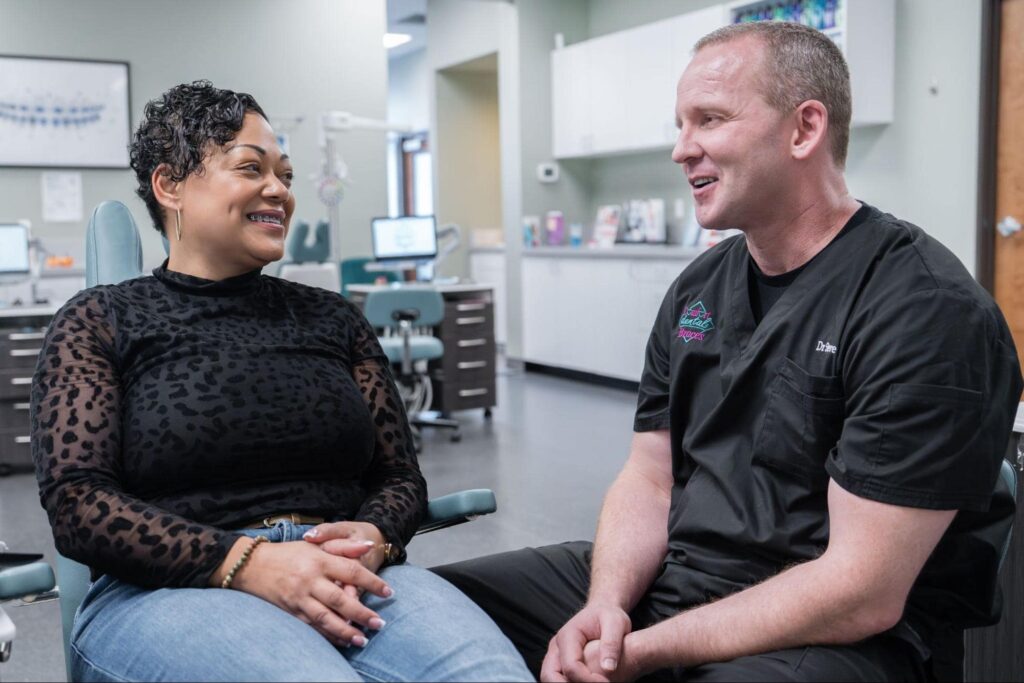
Ready to Start Your Smile Journey?
It’s never too late to invest in your smile. Whether you’re in your 30s, 50s, or beyond, adult orthodontics can improve your oral health and your confidence for the long haul.
Schedule a free consult with Dr. Steve Clawson and the Comfort Dental Braces team to explore your options. Prefer to start from home? Our virtual consult makes it easy, and our digital scans keep the whole process quick and comfortable. Serving adults in Lakewood and Federal Way.
Ready, set, smile!