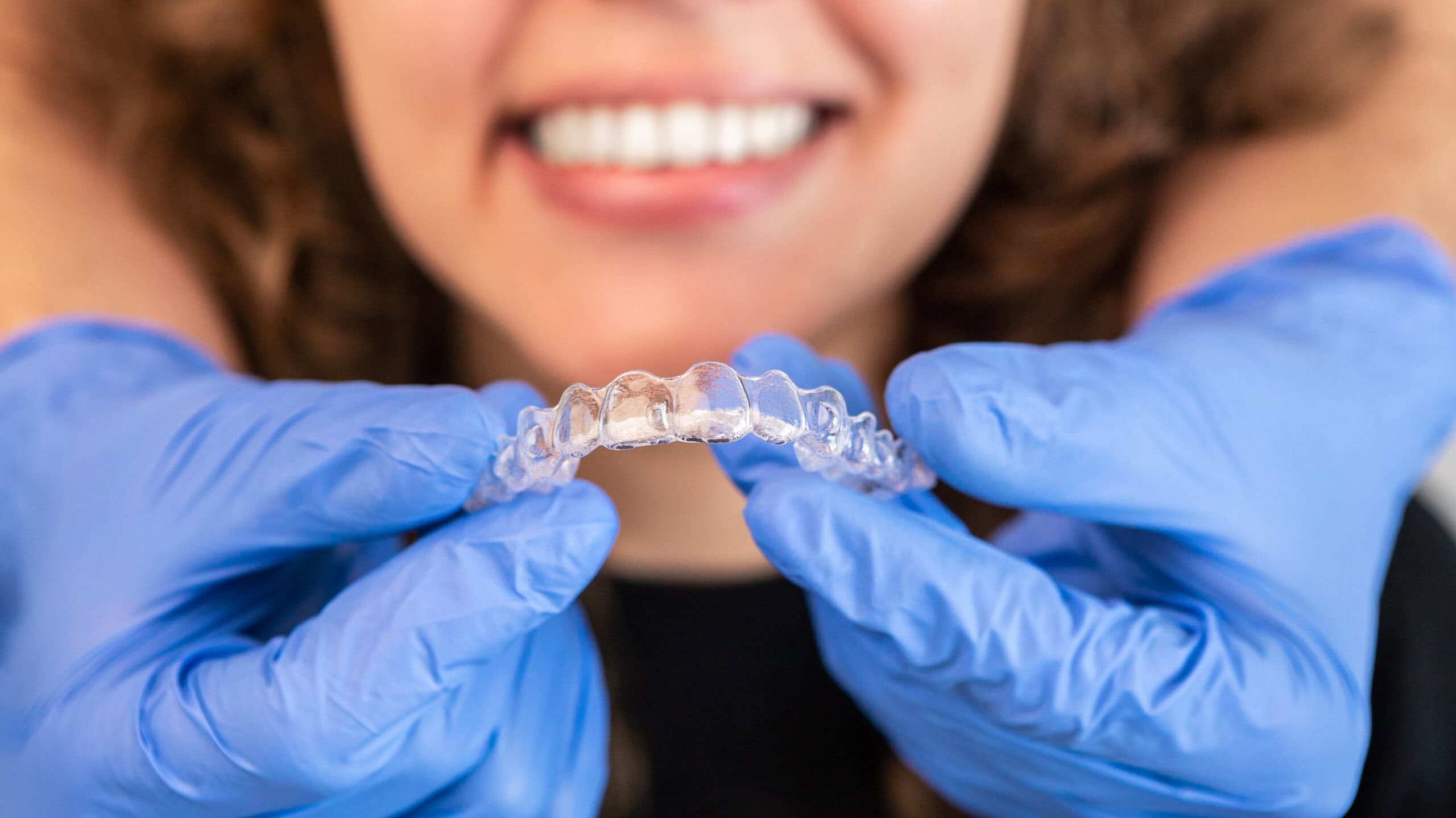
Best practices for keeping aligners clean mean removing saliva, plaque, food debris, and bacteria from your trays every single day. Clean aligners look clear, smell fresh, and stay free of sticky biofilm. At Comfort Dental Braces, we remind every clear aligner patient that the trays need their own care routine, separate from brushing teeth.
Here’s why it matters. Your aligners sit against your teeth 20 to 22 hours a day in a warm, moist, closed environment. That’s an ideal setting for bacteria to multiply. Within a few hours, a thin biofilm starts to form on the plastic.
When we say your aligners are “clean,” we mean three things:
- They look clear and transparent, not cloudy or stained
- They have no odor when you remove them
- They’re free of visible debris and bacterial buildup
Cleaning aligners and brushing your teeth are two different habits. Both are required. Skipping one undermines the other. With a steady routine, your trays stay nearly invisible and your treatment stays on track.
How to Clean Aligners: Daily Routine Step-by-Step
Here’s the simplest way to clean clear aligners without guesswork. Follow this routine daily, and your trays will stay clear, odor-free, and comfortable throughout treatment.
1. Morning rinse and gentle brush Remove your aligners, rinse them under lukewarm (never hot) water, and brush them softly with a dedicated soft-bristled toothbrush. Skip toothpaste, which is abrasive and scratches the plastic. Clear, mild hand soap works well.
2. After meals and snacks Rinse your mouth thoroughly before putting trays back in. Brush your teeth when possible. If you’re out, at least swish with water and rinse the aligners. Food trapped between trays and teeth is the fastest way to invite odor and decay.
3. Nightly soak While you brush and floss your teeth, soak your aligners in a cleaning solution. Options include aligner cleaning crystals, denture cleansing tablets, or a diluted vinegar mixture. Soak for 15 to 30 minutes, then rinse well before reinserting.
4. Weekly deep clean Once a week, give your trays extra attention with cleaning crystals or a longer denture tablet soak. This lifts buildup you can’t see or scrub away daily.
5. Rinse before reinserting Always rinse aligners under clean water after any soak. You don’t want cleaning solution residue going back into your mouth.
6. Clean the aligner case daily Your case needs attention too. Wash it with mild soap and warm water each day, then let it air dry. A damp, closed case is a bacteria factory.
Benefits of Properly Cleaning Your Aligners
A consistent cleaning routine pays off in ways you’ll notice right away, and in ways that protect your smile long after treatment ends. When you treat your trays well, they return the favor.
Here’s what proper aligner hygiene gives you:
- Lasting transparency. Clean trays stay clear, so your treatment stays discreet. Nobody should notice them in conversation or photos.
- Fresh breath. Bacterial buildup on aligners causes odors that no mint can mask. Clean trays mean a fresher mouth all day.
- Healthier teeth and gums. Trapped plaque under aligners can lead to cavities, gum inflammation, and white spots on enamel (demineralization). Cleaning prevents these setbacks.
- Accurate fit. Buildup on the inside of a tray can affect how it seats on your teeth. Clean aligners deliver the planned pressure, keeping your treatment plan on schedule.
- Longer-lasting trays. Each set is designed to be worn for a specific window. Keeping them clean protects them from damage, discoloration, and odor so they feel fresh from day one to day fourteen.
- Better oral health through the full 12-24 months. Clear aligner treatment is a commitment. Daily hygiene habits now protect the smile you’re working toward.
There’s also a quieter benefit: confidence. When you know your trays are clean, you stop second-guessing them. You smile more. You talk freely. That’s the whole point.
Aligner Cleaning Methods Compared
Not every cleaning method works the same way. Some are good for a quick refresh, others for weekly deep cleans. Here’s a side-by-side look at the most common options so you can build a routine that fits your lifestyle.
| Method | Time Required | Best For |
|---|---|---|
| Water rinse | 30 seconds | Quick refresh after meals; not enough alone |
| Clear/mild soap soak | 15-20 minutes | Daily disinfecting; gentle on plastic |
| Baking soda soak | About 1 hour | Gentle antibacterial soak |
| Aligner cleaning crystals | 15-20 minutes | Removing light stains and buildup |
| Denture cleansing tablets | 15-30 minutes | Weekly deep cleans |
| Distilled vinegar soak | 20-30 minutes | Occasional disinfecting; use sparingly |
A few guidelines worth remembering:
- Avoid bleach unless your orthodontist specifically recommends it. It can discolor and weaken the plastic.
- Skip colored or alcohol-based mouthwashes for soaking. They stain trays and dry out the material.
- Never use hot water. Clear aligners are made from thermoplastic, which warps with heat. Stick to lukewarm or cool.
- Toothpaste is a no. Even the “gentle” kinds contain abrasives that scratch the surface, trapping more bacteria over time.
Most patients find that a mix of methods works best, mild soap daily, cleaning crystals or tablets weekly.
If you travel often, a small kit with a case, travel soap, and backup cleaning tablets saves you from relying on bathroom sinks and questionable water.
Who Should Follow These Cleaning Practices?
These best practices apply to anyone wearing clear aligners or retainers, no matter the brand or stage of treatment. If a removable tray sits in your mouth, this routine is for you.
That includes:
- All clear aligner patients: Spark™ by Ormco and other professional systems
- Teens and adults wearing trays 20 to 22 hours a day as part of active treatment
- Patients with attachments or IPR (interproximal reduction), who need extra attention around bonded buttons and tight contacts
- Coffee, tea, red wine, or dark soda drinkers, who may notice staining faster and need more frequent deep cleans
- Patients with plaque buildup or gum sensitivity, where consistent cleaning reduces inflammation
- Retainer wearers after treatment, since the same cleaning principles protect retainers for years
Comfort Dental Braces provides clear aligners for kids, teens, and adults, and Dr. Steve Clawson walks every patient through a cleaning routine during their visits. If you’re newer to aligners, we’ll help you build the habit. If you’ve been wearing them for months, a quick refresher never hurts.
Frequently Asked Questions
What’s the best way to clean clear aligners?
Rinse your aligners with lukewarm water every time you remove them, and gently brush them with a soft toothbrush and mild soap. Each night, soak them in aligner cleaning crystals or a denture cleansing tablet for 15 to 30 minutes while you brush your teeth. Rinse thoroughly before putting them back in.
Can I use toothpaste on my aligners?
No. Toothpaste contains mild abrasives designed to polish enamel, but those same ingredients scratch the soft plastic of clear aligners. Scratches trap bacteria, cause cloudiness, and make trays harder to keep fresh. Stick with clear, mild hand soap or a product designed for aligners.
Why do my aligners smell bad?
Odor almost always comes from bacterial biofilm that builds up on the plastic. If a rinse and daily brushing aren’t enough, your trays need a deeper clean. Try a nightly soak in cleaning crystals or denture tablets, and make sure your case is being washed daily too.
Can I soak aligners in mouthwash?
It’s best to avoid it. Most mouthwashes contain dyes that stain clear aligners green, blue, or amber, and the alcohol content can dry out and weaken the plastic. If you want a disinfecting soak, choose a product made for aligners or retainers instead.
How often should I deep-clean my aligners?
At least once a week. A weekly deep clean with aligner cleaning crystals, denture tablets, or a longer soak lifts buildup that daily brushing can’t fully remove. Patients who drink coffee, tea, or wine often benefit from deep cleaning two or three times a week.
Is hot water safe for cleaning aligners?
No. Clear aligners are made from a heat-sensitive thermoplastic, and hot water can warp them permanently. A warped tray won’t fit correctly and may set back your treatment. Always use lukewarm or cool water, whether you’re rinsing, soaking, or brushing.
Clean aligners are the quiet secret behind a smooth clear aligner experience. If you have questions about your routine, want to start treatment, or need a refresher from Dr. Clawson and the team, we’re happy to help at either Comfort Dental Braces location, our Lakewood office at (253) 474-0196 or our Federal Way office at (253) 839-1745. Ready, set, smile!